By Devlin Marino
A large gathering of people meet and mingle inside the quaint store “The Cellar” on Elmwood Ave., as the sun shines peculiarly yet tranquilly on an early March day. Parallel to weather outdoors, the listening party for Skate Cobain’s debut album smoothly carries on, as Skate himself calmly sits and talks with those who have come to show support. The room is filled with blunt smoke, as if it were an NBA locker room, cigars filling the room with celebratory smoke. Folks from all around the community come together to celebrate the mark of Skate Cobain in the Buffalo Hip-Hop scene, throwing his “Coming-Out Party”. In this small genuine moment, one truly gets a glimpse into what Art of Procrastination 2 means and more notably, who Skate Cobain is.
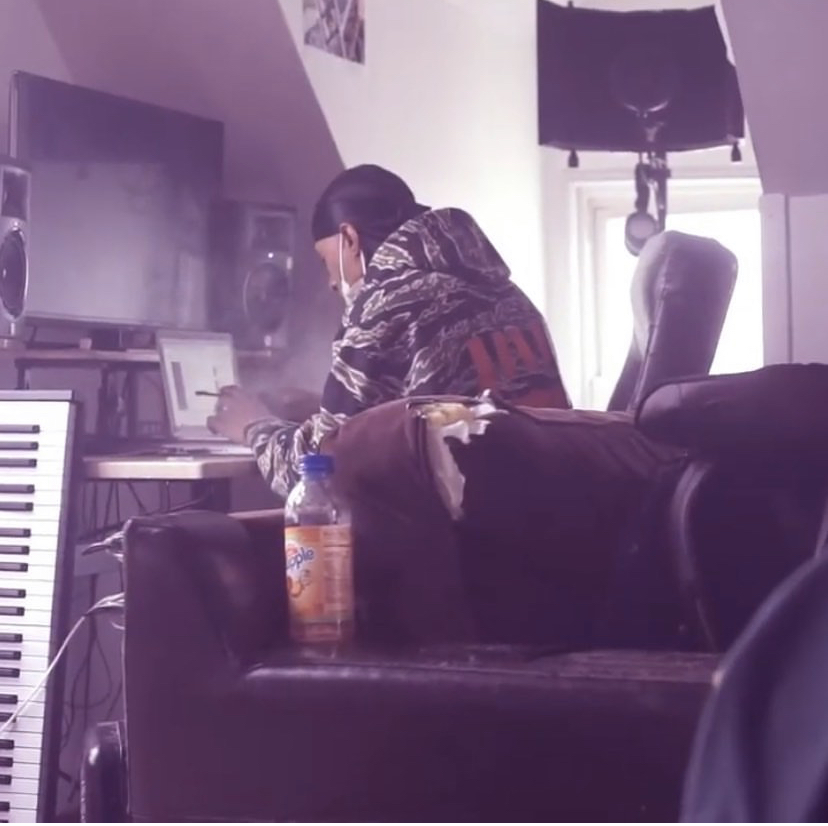
The Art of Procrastination 2 dropped on February 22, 2020 to much anticipation from many artists, producers and individuals around the Buffalo Hip-Hop scene. Oddly enough, despite being a rapper for roughly ten years, Skate Cobain has never released any solo music. With that being said, none of that necessarily ever held back Skate Cobain, managing to establish himself as a figurehead of the underground Buffalo scene through his time spent with Ooze Gang and initially Koolie High. When asking Skate Cobain what was the driving force behind AOP2, he said,
“Well, I’ve been rapping for so long and I am a personality. I am a fixture in Buffalo Hip-Hop, so I just feel like it was necessary, you feel me? Solidify it”, says Skate Cobain, “let me drop this tape just to show everybody I can rap. Cause I do a lot of other shit, so it’s just to solidify my rap. Like ‘yo I’m better than most of you’”
Making music and maintaining that overall artist image can be difficult and mentally taxing, which Skate Cobain is no stranger to. When Skate went on his first journey to create a solo project, it almost caused him to give up on being a “solo” artist.
“I started a project a few years back and basically completed 90% of it, [and then] the computer crashed.,” states Skate, “It was the ‘Art of Procrastination 1’, the original. And when it first happened, I was like ‘you know what, fuck this. I don’t do albums. I’m not a rapper. I just do features when I feel like it’.”
In reality, that had been working well for Skate, especially during his time with Ooze Gang, Skate noting “when we started up our Ooze Gang campaign, I was like, I’ve never been more motivated. [and] I was in a position where I could call some shots, you know what I mean? I could put in more directions as opposed to when I was in Koolie High. It’s just like, ‘I’m here for the ride, whatever we need to do’. Ooze Gang was like, I was saddled up. My shoes were tied tight and I knew what I wanted to do. So I was executing shit that I saw in my mind.”
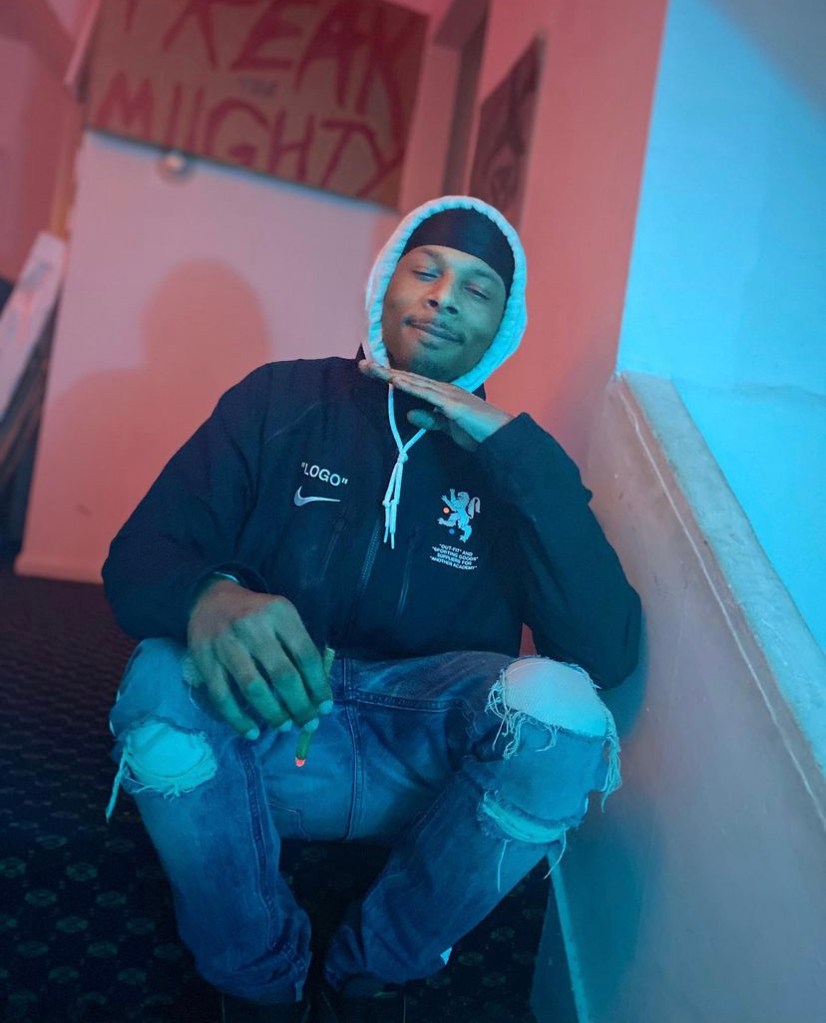
With any pursuit of solo work at the back of his mind, Skate continued to solidify his place in the Buffalo Hip-Hop community with a handful of Ooze Gang projects and co-hosting “Local Legend Podcast”, a podcast focusing on some of the best creatives the City of Buffalo has to offer. Skate kept rolling with this until one day, “I just got the bug, you feel me?” recollects Skate Cobain. Tragically, Skate’s cousin passed away, with Skate recalling, “My cousin passed away, maybe that had something to do with it and I just had a fire.”
That fire continued to burn bright, as Skate cranked out the Art of Procrastination 2 in “roughly a month to 45 days”. A third of that time was spent by Skate rolling out the album, which played a pivotal role in its success. The online hype within the Buffalo Hip-Hop Community was high, supplemented by unique, eye-catching album artwork. The album boasted two album artworks, created by Khalil Senpai, incorporating Skate’s old family photos and Dutch Master artwork, illustrating to the listener who Skate Cobain is.
The entire roll-out was thought up on the fly by Skate himself, describing the process saying “I’m a thinker, I like to say. So I just sat around and thought of shit. The fucking Pokemon cards. The Cellar release and shit like that were just ideas I had. It wasn’t necessarily a plan, like ‘yo, we gotta execute this and that’. It’s just things that we thought we needed to do to represent my shit.”
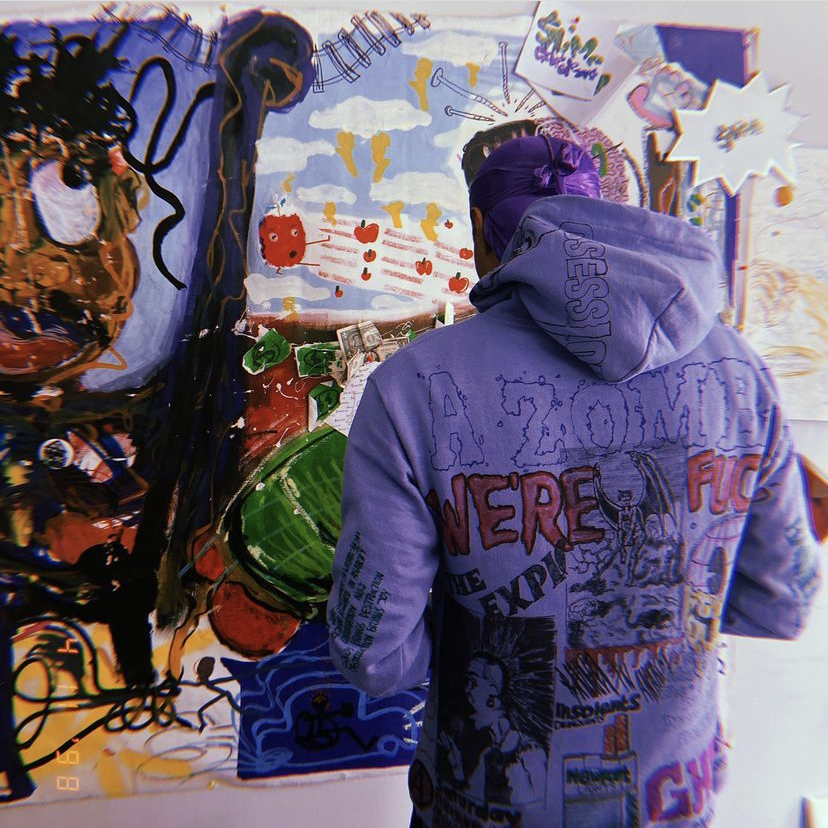
Art of Procrastination 2 exhibits Skate Cobain’s artistic versatility through songs like “Fliers”, a conversational flow taking you through a typical day for Skate, or “Survivor’s Remorse, with Skate claiming “ I feel like that the most vulnerable I’ve ever been in a rap”.
What the album also successfully does is give us a lens into who Skate is. On the track, “Sui”, Skate says “Been through it all, Yeah I’m a dog. Bigger they are, the harder they fall. N—-s holding me up like a wall. I took those risks and now I’m a boss.”, which sounds metaphorical but you’d be wrong.
Skate explains “Yo it sounds like it’s a metaphor but that’s literally my real story. I’ve been through it all, like ‘the all’ is a multitude of things, you feel me? My tracklist and shit I’ve been through speaks for itself so I don’t have to go into it but I’ve been through it all and it made me a dog. So, the bigger they are, whoever the opp is or the competition [is], the harder they fall. That’s a normal saying, all our dads taught us that shit. The ‘holding me up like a wall’, that was an ode to people that pretend to have your best interests at heart, you know what I mean? They just want to keep you close, under their wing. You’re holding me up like a wall. So eventually, I had to take those risks and do the things I deem necessary. Do the shit I felt was necessary and not to get validation from someone else. Just do the shit that I thought was necessary and that made me a boss, know what I mean? Not anyone else. So like, everything isn’t for everyone. I always tweet that shit randomly. I always put that shit up, post it on everything because everything isn’t for everyone. You could be telling me one thing, it’s gonna work one way, [then] I do it and it turns out a totally different way, you know what I mean? But yeah, that’s not a metaphor. Nah, that’s straight.”
What the track “Sui” also gives us a glimpse into is the talent from Buffalo that Skate put together for this album. The track “Sui” boasts Freak the Miighty member Neftali with the album as a whole containing some of the city’s best out, flaunting Gaine$, Billie Essco, 14 Trapdoor’s Bendyface, MileHigh’s YoLeek, Toneyboi, Ayam JC, including young stars The Miserable Genius, Nolo the Slayer and ZayRo$e.
Skate elaborated on the wide-ranging features saying, “Literally, I fuck with all these people. I fuck with their music.So when I made my music, it was only right that put them on, you feel me? I feel like my fans deserve to hear Zayro$e. I feel like my fans deserve to hear Miserable Genius. I feel like my fans deserve to hear YoLeek. So like I went out and got the people I’m impressed by. You know what I mean, put them on there. It came together nice, I’m proud of that shit.”
The album also incorporates some of the most talented producers working in and around the Buffalo Hip-Hop Community. Skate reflects on this saying, “A lot of these people I see on a daily basis but we just haven’t worked together, so it’s just [long] time coming. Mvrro is OD, fire every time we link. Same with Flexx. Lordy, Psoulist. All of these dudes bring out a different flow. That’s why there’s so many vibes and so many flows [on the album]. I’m willing to work with anyone I super, super fuck with. I wanted to make sure it was thorough and not to leave anyone out. That’s why there are so many features and so many producers and shit. It was like my Nas, you feel me?”
Many of the fine details and aspects that Skate had thought out played an essential role in the album’s success and the overall product, when considering the roll-out and production on the album that the Art of Procrastination 2 became.

When describing the album Skate said, “I just want to push the envelope bro. I want to show people like you can care about your shit, you know what I mean? Even on the small shit, you can care. People notice, you know what I mean? But like put in the work. If we all put in the work, it’ll make everything look better. It’ll make everything look better.”
Art of Procrastination 2 permanently etched Skate Cobain into the proverbial bedrock of the Buffalo Hip-Hop scene, with the thoughtful roll-out, outstanding features and production and Skate’s enigmatic flow and bars. The album is an idyllic view into the man Skate Cobain, told through his specific sound and fluid bars.
When asking Skate if he viewed Art of Procrastination 2 as his coming-out party as an artist, he said “Yeah, it’s definitely my coming-out party. A bunch of people know I rap. A bunch of people know what I’m into but like that was the first time I stamped it and put my name and face on it.”
 Buffalo Hip Hop Collective